Hybrid Study Framework
Table of Contents
Why use it?
What is it?
Study schedule.
How to study.
Customization and tips.
Customization.
Tips.
Resources
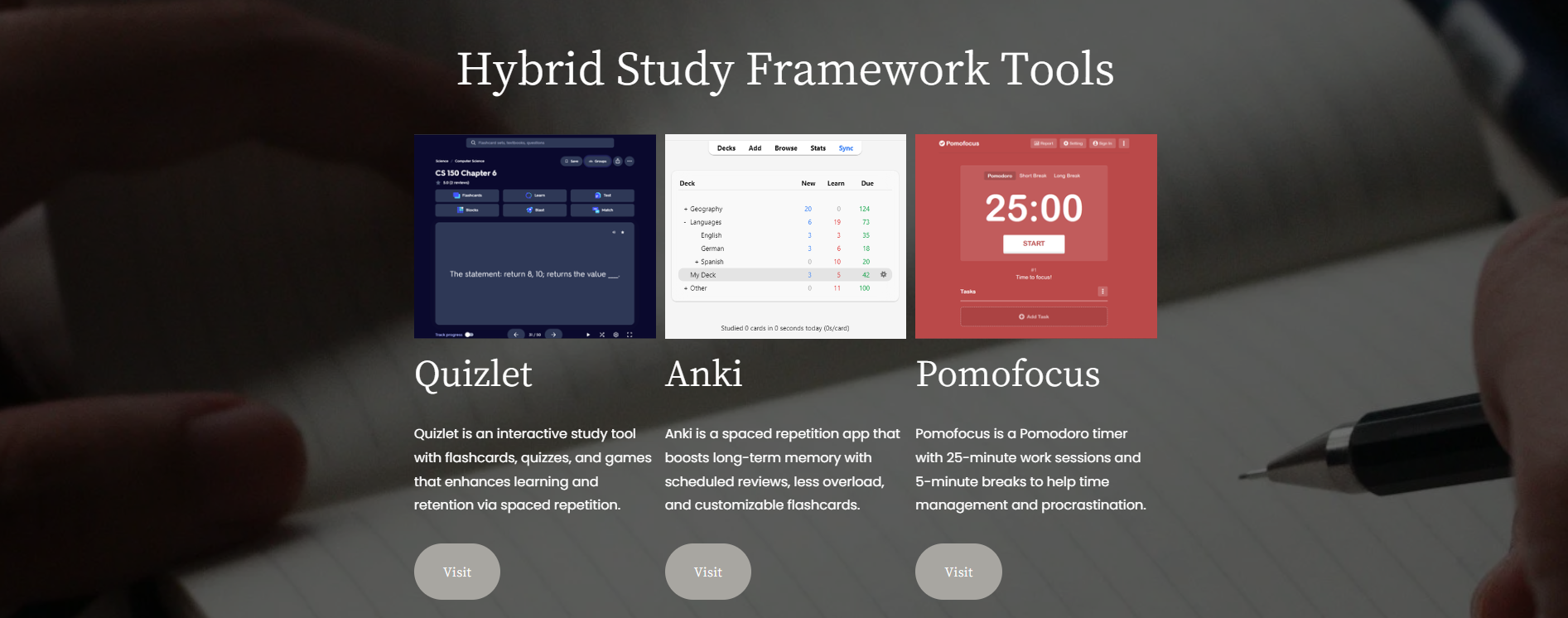
Digital tools.
Printable/digital templates.
Diagrams of the Hybrid Study Framework.
Why use it?
Inefficient studying often results from scattered studying, leading to rapid forgetting and wasted effort.
The Hybrid Study Framework addresses this by integrating three proven methods:
Spaced repetition, which optimizes the study schedule to reinforce memory over time.
The Pomodoro technique, which structures study sessions into focused intervals with breaks to maintain concentration.
Active recall, which engages the brain through deliberate retrieval practice rather than passive review.
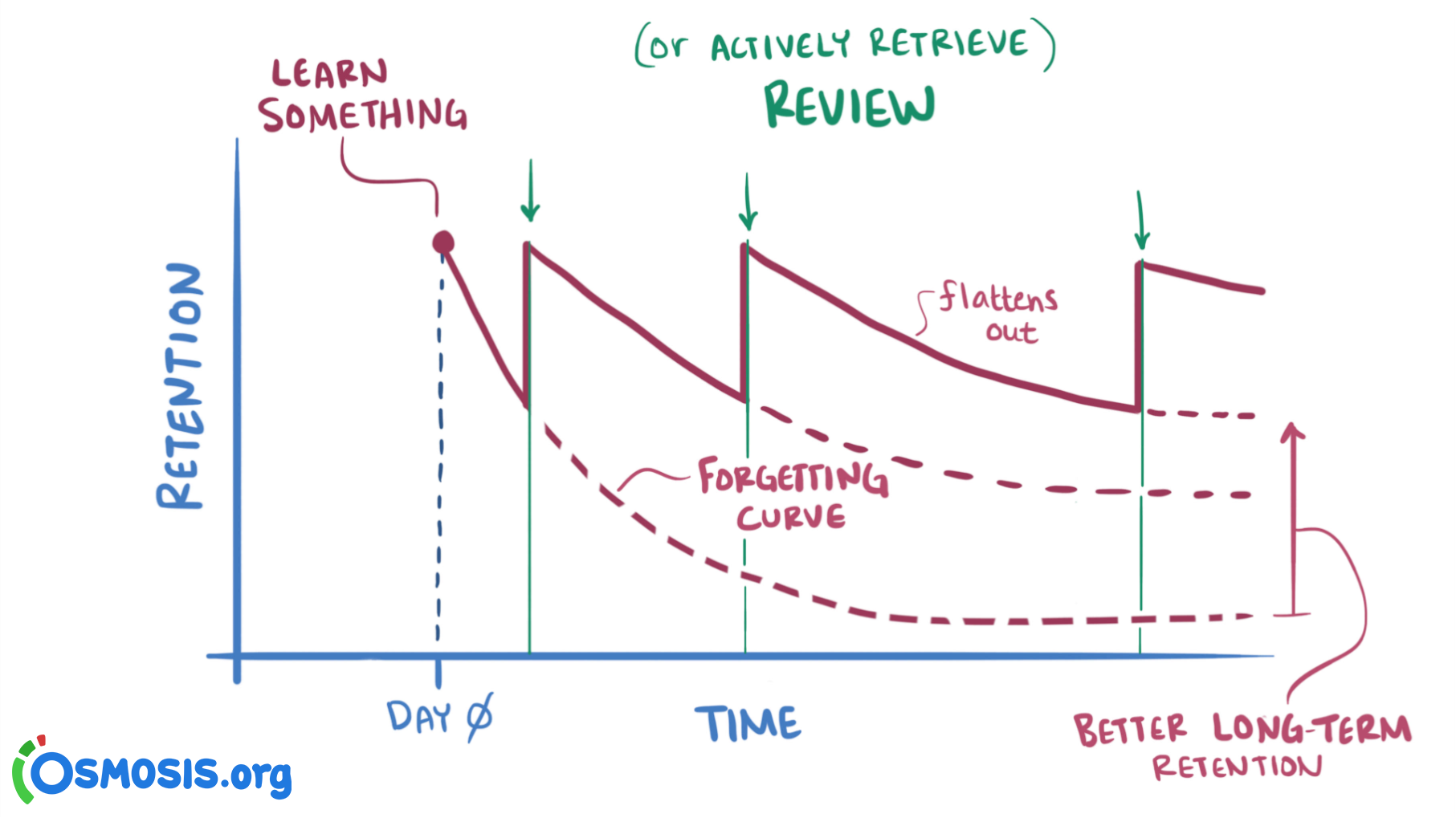
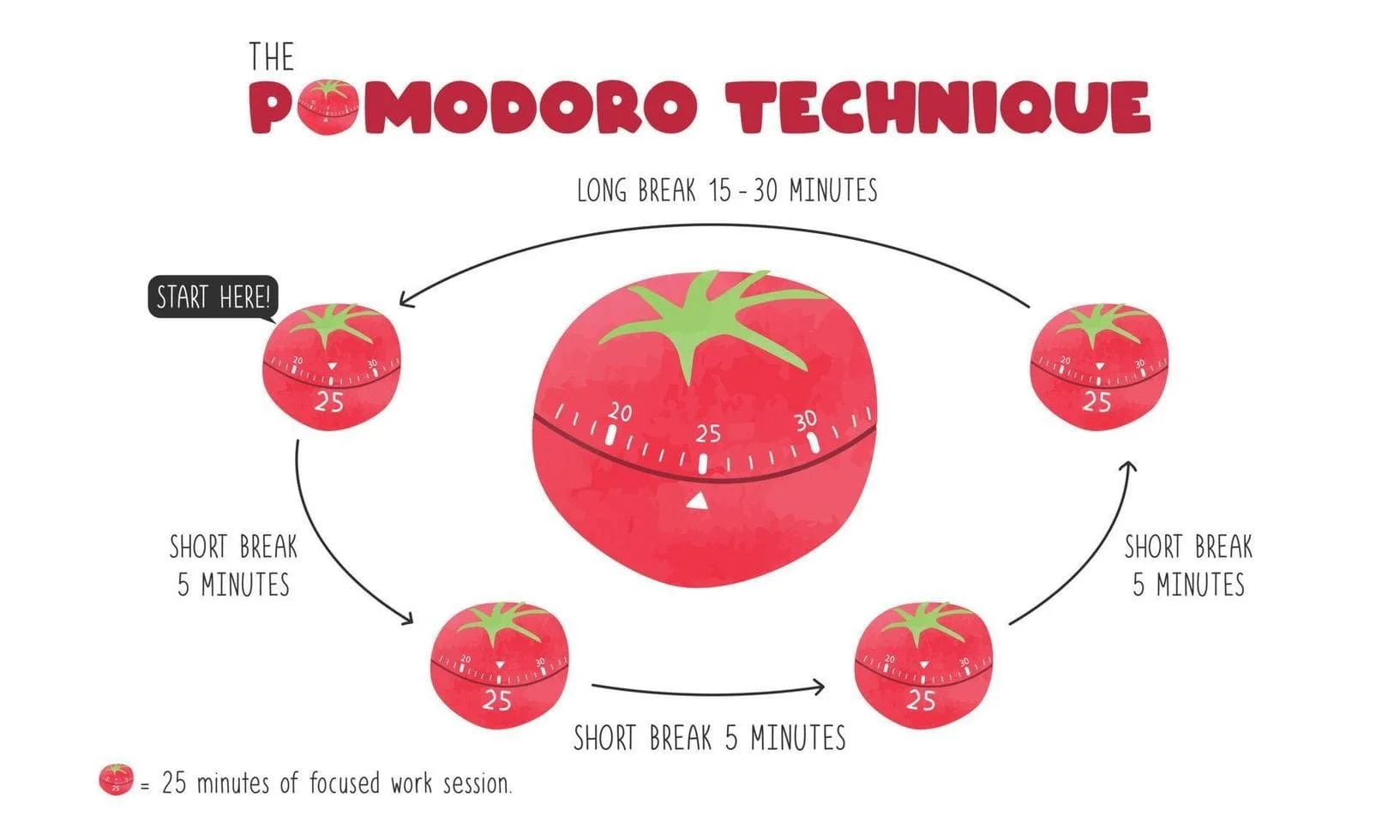
This combined approach ensures not only systematic learning but also maximizes long-term retention and productivity.
What is it?
The core principles of this framework revolve around maximizing both retention and productivity by employing scientifically supported techniques that have been rigorously tested.
Study Schedule.
Structure study sessions in a way that allows for breaks:
Select a specific topic of study.
Set a timer for 25 minutes and work on that task until the timer goes off.
After completing one round, take a short 5-minute break to rest your mind.
Repeat this cycle four times, then take a longer break of 15 to 30 minutes to recharge more fully.
Tracking the rounds done for each subject can help you monitor your productivity and adjust accordingly.
Space the times you study and the topics covered:
Organize study material into manageable chunks.
Do an initial review after first learning the content, ideally within 24 hours.
Gradually increase the intervals between reviews—such as reviewing after one day, then three days, one week, two weeks, and so on—adjusting based on how well you recall the information.
Use tools or apps designed for spaced repetition to automate and track these intervals.
How to study.
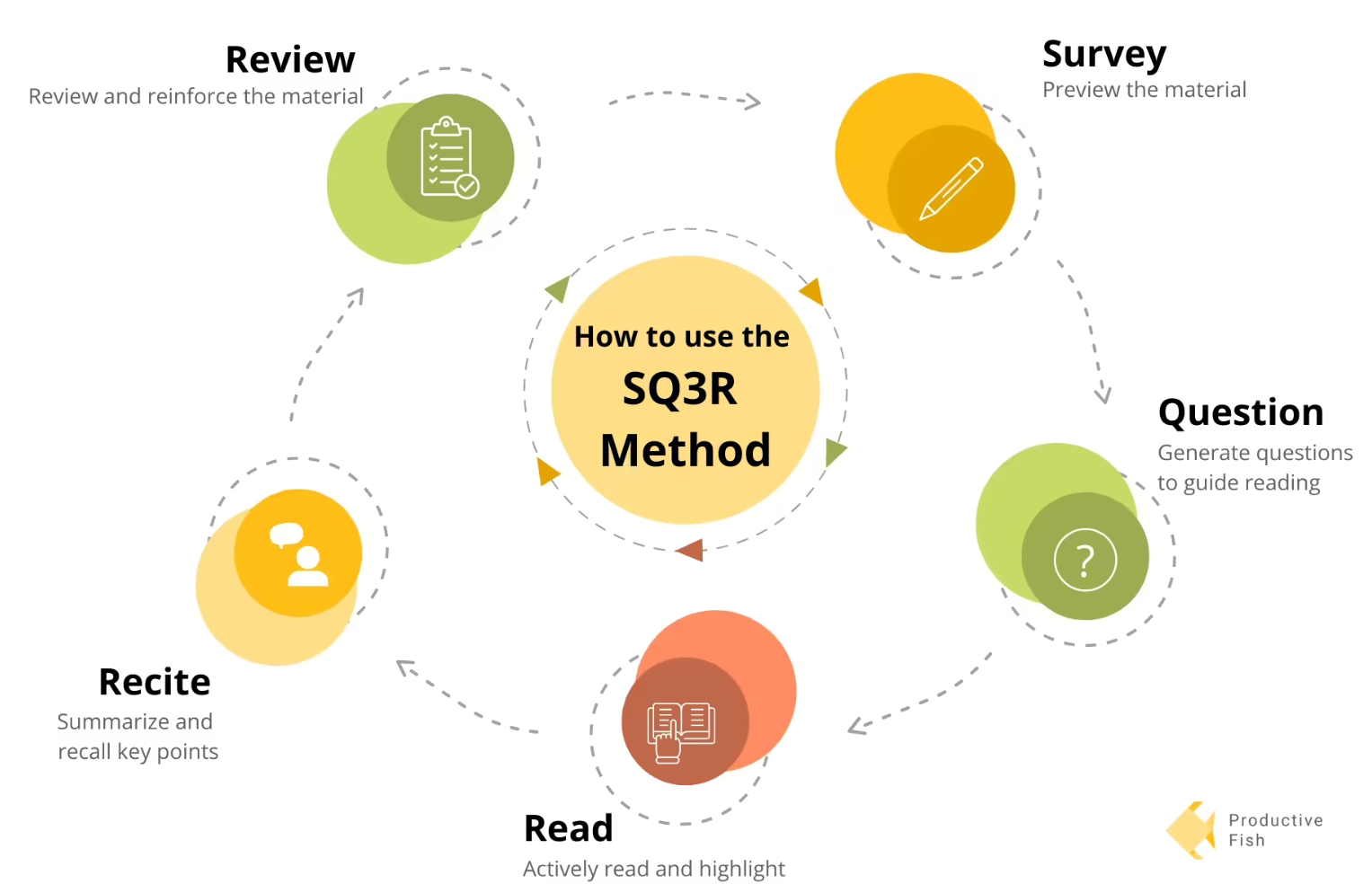
When dealing with new material, skim it, question it, read it, recite it, and review it:
Surveying the material: skim headings, subheadings, summaries, and any visuals to get a general overview.
Make questions on those headings to set objectives for reading.
Read actively, seeking answers to the questions you created.
Recite key points aloud or write them down from memory.
Review the entire content regularly, revisiting notes and summaries.
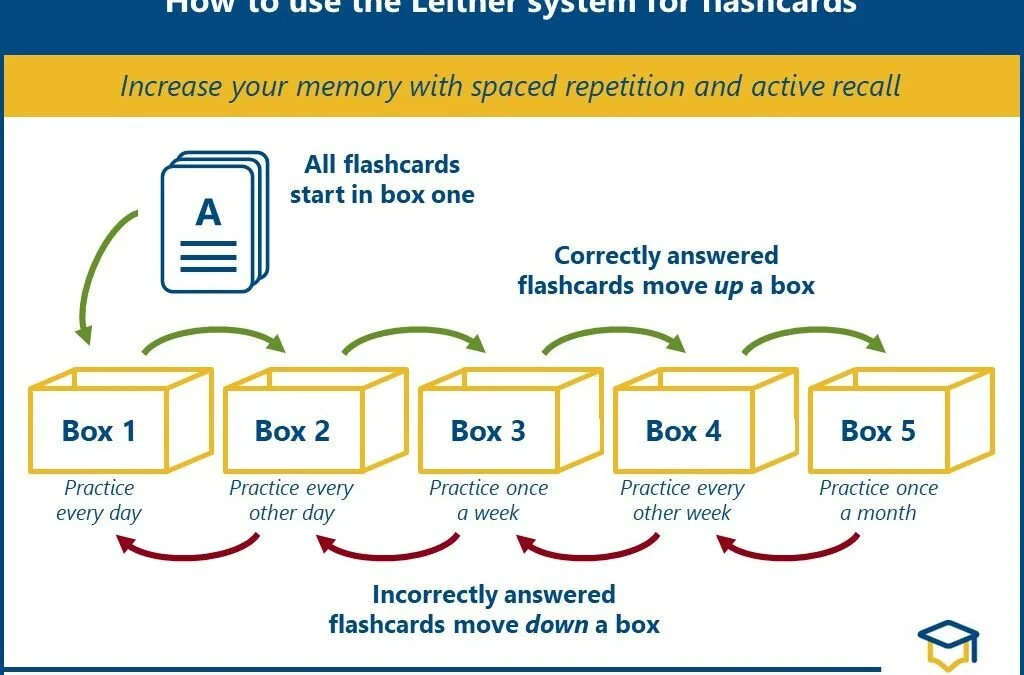
Use and organize flashcards based on what you can or cannot recall:
Create a set of flashcards focused on the topic or concept.
Label each flashcard with a question on one side and the answer on the other.
Arrange these cards into multiple boxes or compartments representing different levels of mastery.
Review all cards in the first box; if you answer a card correctly, move it to the next box.
If you answer incorrectly, revert the card to the first box.
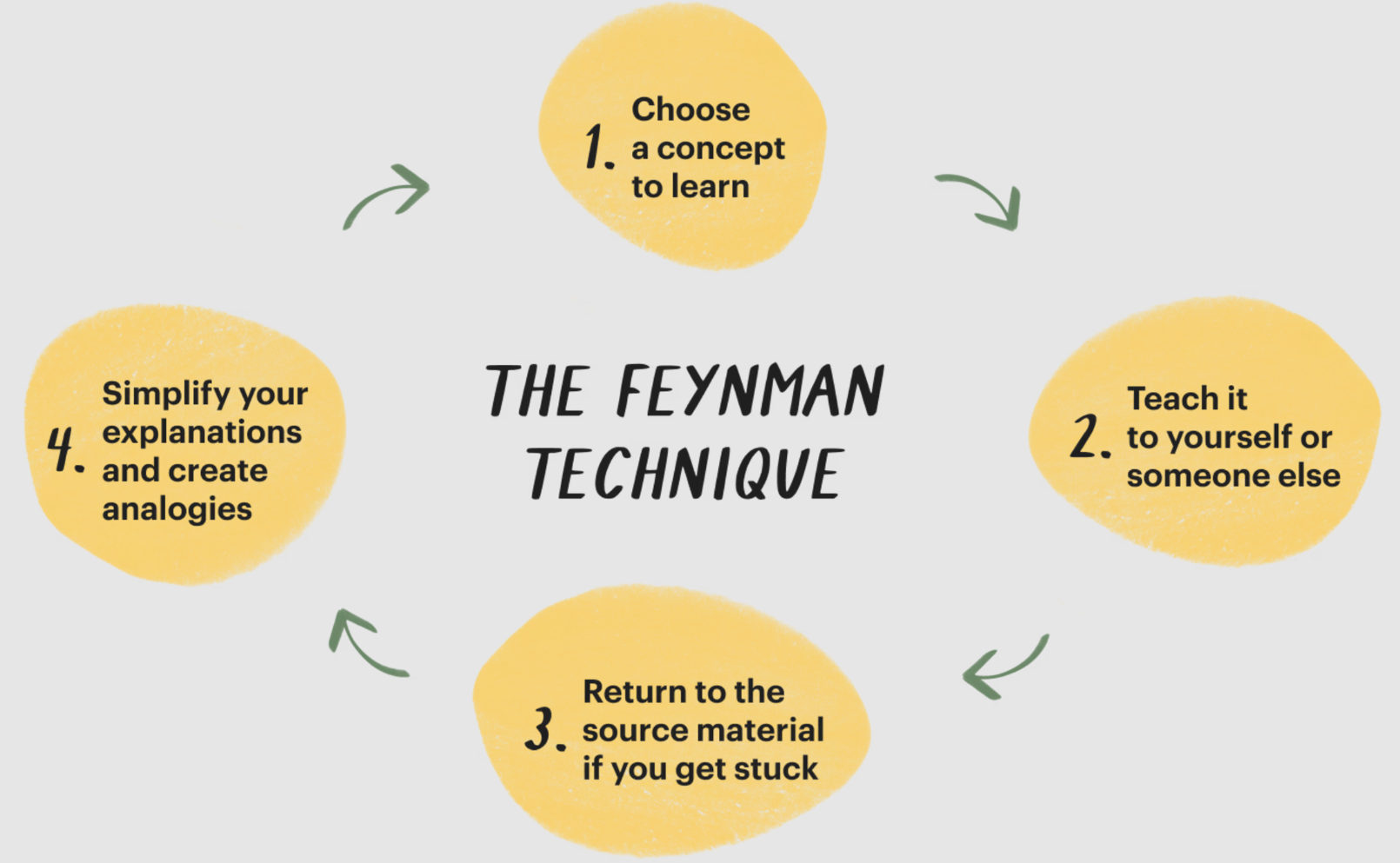
Practice explaining information rather than recalling it:
Select a specific concept or topic you need to learn.
Write down everything you know about it as if you are teaching it to someone with no prior knowledge.
Identify any gaps in your understanding and return to your study materials to review those areas.
Refine your explanation by simplifying complex terms and using analogies.
Repeat this process until you can confidently explain the concept in straightforward terms without any confusion.
Customization and Tips.
The ability for students to customize their study approach and receive tailored assistance is crucial for academic success.
Customization.
Visual learners might incorporate diagrams and color-coded notes.
Auditory learners could benefit from recording lectures or discussing material aloud.
Time management should adjust study session lengths and break intervals to match concentration spans.
Integrating personal interests or relevant real-world examples can make the material more engaging and easier to retain.
Tips.
Regularly test yourself on the material.
Space out these self-quizzes over days or weeks.
Use this method into group study sessions.
Apply this technique across various subjects.
Resources.
Digital tools—flashcards, note apps, quizzes, calendars, and task managers—boost study efficiency and engagement through personalized learning, time management, and group collaboration.
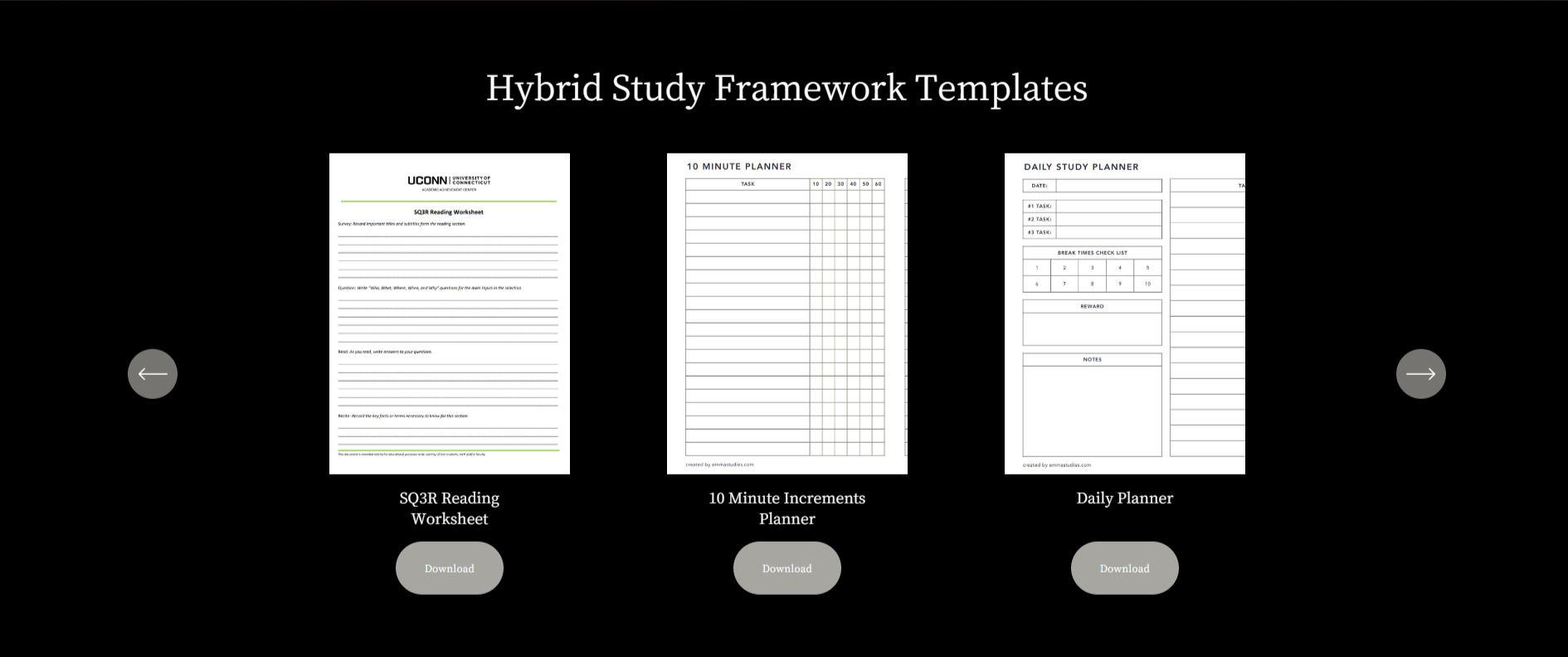
Printable and digital templates organize notes, track progress, and plan sessions. They aid goal setting, time management, and revision, improving focus and academic success.
Diagrams of the Hybrid Study Framework
Diagrams visually simplify complex information. Flowcharts, mind maps, and schematics help students understand concepts, link ideas, highlight key points, and boost memory. This method suits various learning styles and encourages active study for academic success.