The U.S., Ecuador, and World War II FRQ
-
a) Analyze the diplomatic and military participation of Canada and one country in Latin America in WWII. Significance
b) Assess the social impact of WWII on women and ethnic minorities in Canada and one country in Latin America. Perspectives
c) Discuss the ways in which Canada’s and one country in Latin America diplomatic and economic position changed as a result of WWII. Consequence
-
1) _____ Write Question (3 pts)
a) _____ name (3 pts)
b) _____ date (3 pts)
c) _____ grammar (3 pts)
d) _____ 2 pages (3 pts)
2) _____Thesis – 1st paragraph (3 pts)
a) _____Supporting Argument #1 (3 pts)
b) _____Supporting Argument #2 (3 pts)
3) _____Supporting Argument #1 – 2nd paragraph (3 pts)
a) _____ Describe/Explain Historical Thinking Skill. (3 pts)
b) _____ Elaborate about the time period and/or argument. (3 pts)
c) _____Names OR Events OR Vocabulary AND why they are important. (3 pts)
d) _____Names OR Events OR Vocabulary AND why they are important. (3 pts)
e) _____Names OR Events OR Vocabulary AND why they are important. (3 pts)
f) _____Historical Accuracy (are your historical facts correct) (3 pts)
g) _____The Argument answers the question (3 pts)
4) _____Supporting Argument #2 – 3rd paragraph (3 pts)
a) _____ Describe/Explain Historical Thinking Skill. (3 pts)
b) _____ Elaborate about the time period and/or argument. (3 pts)
c) _____Names OR Events OR Vocabulary AND why they are important. (3 pts)
d) _____Names OR Events OR Vocabulary AND why they are important. (3 pts)
e) _____Names OR Events OR Vocabulary AND why they are important. (3 pts)
f) _____Historical Accuracy (are your historical facts correct) (3 pts)
g) _____The Argument answers the question (3 pts)
5) _____Contextualization (Summarize the time period) – 4th paragraph (3 pts)
a) _____ What was occurring? (3 pts)
b) _____ Where were the events occurring at? (3 pts)
c) _____ Why were these events occurring? (3 pts)
d) _____ How were these events occurring? (3 pts)
e) _____ Who was involved and in what ways? (3 pts)
-
Date of writing: 2/11/2026
Time limit: 45 minutes
Preparation time: 4 days
Chosen prompt: Analyze the diplomatic and military participation of Canada and one country in Latin America in WWII. Significance
Word count: 815
Grade: 100%
Canada and Ecuador have had apparent, significant diplomatic and military roles in World War II; however, the magnitudes and characteristics of the roles that they assumed varied noticeably. Canada during World War II acted as a major, primary contributor to the Allied war effort, offering both political, industrial, and military strength. Though, they were often outshined by more major powers like the US and Britain. Ecuador, on the other hand, assumed a more symbolic role that brought diplomatic and strategic positives for the Allies.
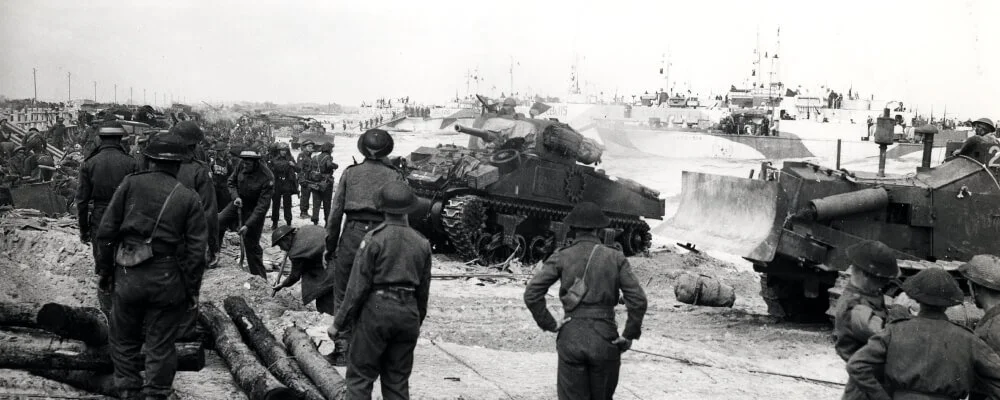
Canada's entry into World War II was significant primarily due to they're industrial and military power; Canada had approximately 1.1 million soldiers who participated across their years of warring effort, alongside the distribution of industrial goods to Allied powers. The significance of Canada throughout the Second World War must be understood in a broader global light; the nation joined because of its ties to the British Commonwealth. By shining Canada under the global light that is the Second World War, Canada's Japanese Internment becomes visible as a major event; it was a government sweeping action that placed citizens of Japanese descent into internment camps out of fear and prejudice. While Japanese Internment in Canada massively displaced families and fostered resentment, the swift political move exemplified Canada's government mobilization and commitment toward the Allied war effort---in a way also signifying their transformation into a major diplomatic power. Additionally, Canada participated in an event known as the Dieppe Raid, an offensive conducted on a fortified German port. Dieppe raid corroborates the view of Canada as a significant Allied power, as the event---although a loss---offered significant strategical insight on amphibious warfare and how the Allies could approach the invasion of German territory better. Finally, Canada participated in arguably one of the most pivotal moments for the Allies during World War II: D-Day, the Allied invasion of Normandy, France. While the magnitude of Canada's impact during D-Day is debatable, they undoubtedly held a major role, using what they have learned from the loss at Dieppe Raid to facilitate the Allied invasion and contribute significantly to their war efforts later on.
Where Canada played a major political and military role as an Ally on the World Stage, Ecuador's moments were more subtle. For additional information, Ecuador was dealing with territorial disputes with Peru early on that, once resolved, allowed the US to cast a sharp shadow of influence over the nation. While Ecuador was backed by the major world power that was the US, Ecuador's significance lied in their strategic positioning in South America, facilitating the US spread of influence and contributing greatly to the Allied war efforts being conducted in both the Atlantic and Pacific Theatres. As stated before, Ecuador dealt with Peruvian territorial disputes, which were eventually settled through the Rio de Janeiro Protocol, a government enstatement that settled borders and officially adopted Ecuador as an Allied power. With Ecuador joining the Allies, the nation assumed a quite symbolic role, demonstrating the US's influential reach and signifying the spread of Allied diplomacy. Furthermore, after the Rio de Janeiro Protocol, the US was able to construct naval and air bases within Ecuadorian territory, more specifically, on the Galapagos Islands---which were annexed by Ecuador in earlier years---and the city of Salinas. The active usage of Ecuadorian soil by the US presents Ecuador's significance as an Allied power and contribution to the Allied war effort. In a similar fashion, not only did the Latin-American nation facilitate US mobilization, but it also completely severed its ties to the Axis when it declared war in February of 1945, symbolically exemplifying their diplomatic and strategic role within the Allied atmosphere.
The stated events---like the Dieppe Raid, D-Day, Japanese Internment, and the installation of the Rio de Janeiro Protocol--- occurred throughout the period of the Second World War, with any long-term implications dealt by the war lasting long after. The events primarily took place in Canada's and Ecuador's home soil respectively; though, it should be noted that the affects of their efforts---especially Canada's---unfolded across Europe and the US. While both Canadian and Ecuadorian involvement in the Allied environment could be attributed to their affiliation with Allied powers, like the US and Britain, the war itself was caused by Germany's violation of the Munich Agreement and the vast, rapid establishment of expansionist policies. The World War, resulting in conflicts like D-Day and the Dieppe Raid, unraveled in the form of widespread terror, massive loss, significant destruction, and social devestation. As for people involved in the case of Canada and Ecuador, the primary political figures involved include Canada's William McKenzie King and Ecuador's Carlos Arroyo del Rio. The result of World War II was not only the victory of the Allies, but also the introduction of numerous countries and marginalized populations as significant global contributors.